

In modern hospitality environments, guest room refrigerators are no longer optional amenities—they are an expected standard that directly influences guest comfort, satisfaction, and overall room value. For hotel owners, operators, and procurement teams, choosing the right refrigerator requires careful evaluation of size, noise level, energy efficiency, and design compatibility. With a wide range of hotel mini bar refrigerators and guest room refrigeration solutions available, understanding their differences helps decision-makers select the most suitable option for each property type.
This article compares key categories of guest room refrigerators used in hospitality spaces, focusing on functionality, application scenarios, and operational considerations for B2B hotel buyers.
Guest room refrigerators serve multiple purposes beyond basic cooling. They support in-room mini bar programs, enhance guest convenience, and contribute to positive reviews by meeting modern travel expectations. In business hotels and extended-stay properties, refrigerators allow guests to store beverages and personal items, while in boutique and luxury hotels, they also function as design elements that reflect brand positioning.
From an operational perspective, hotel refrigerators must deliver stable performance, quiet operation, and long service life. These requirements make purpose-built hospitality refrigerators more suitable than household models for professional hotel use.
Hotel mini bar refrigerators are specifically designed for compact guest room environments. Their smaller footprint allows easy installation inside cabinets, under desks, or beside wardrobes without disrupting the room layout. Despite their size, these refrigerators provide sufficient capacity for beverages, snacks, and basic perishables commonly offered in hotel mini bars.
Most mini bar refrigerators prioritize low noise operation, making them ideal for sleeping areas where even minimal sound can affect guest comfort. Energy-efficient cooling systems also help hotels manage electricity consumption across large room inventories.
Mini bar refrigerators are available in a range of capacities, with 30-liter models being among the most popular choices. These units balance storage capacity with minimal space requirements, making them suitable for standard rooms, executive rooms, and business hotels. Smaller capacity models are often used in economy hotels, while larger mini bar units fit premium rooms that offer expanded in-room amenities.
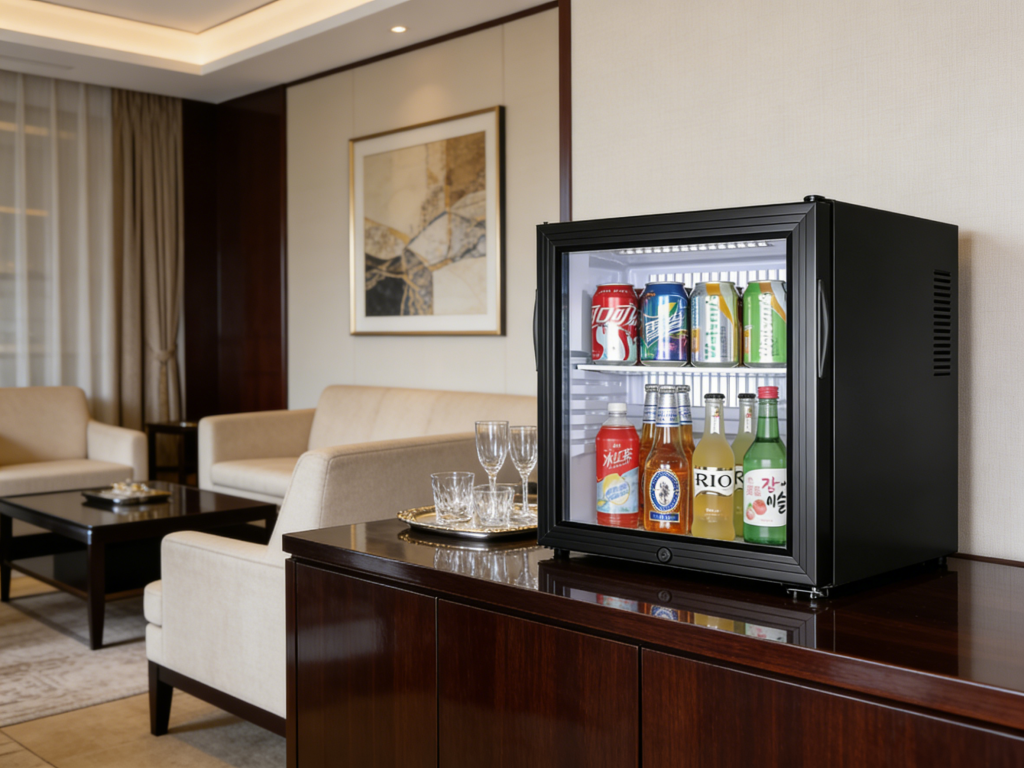
Glass door guest room refrigerators are increasingly popular in hospitality settings. Their transparent tempered glass panels allow guests to view contents without opening the door, which helps maintain internal temperature stability and reduces energy loss. This visibility also supports mini bar sales by making beverages and snacks more appealing and easier to browse.
Glass door refrigerators are commonly used in boutique hotels, upscale rooms, and suites where visual presentation and modern aesthetics are key considerations.
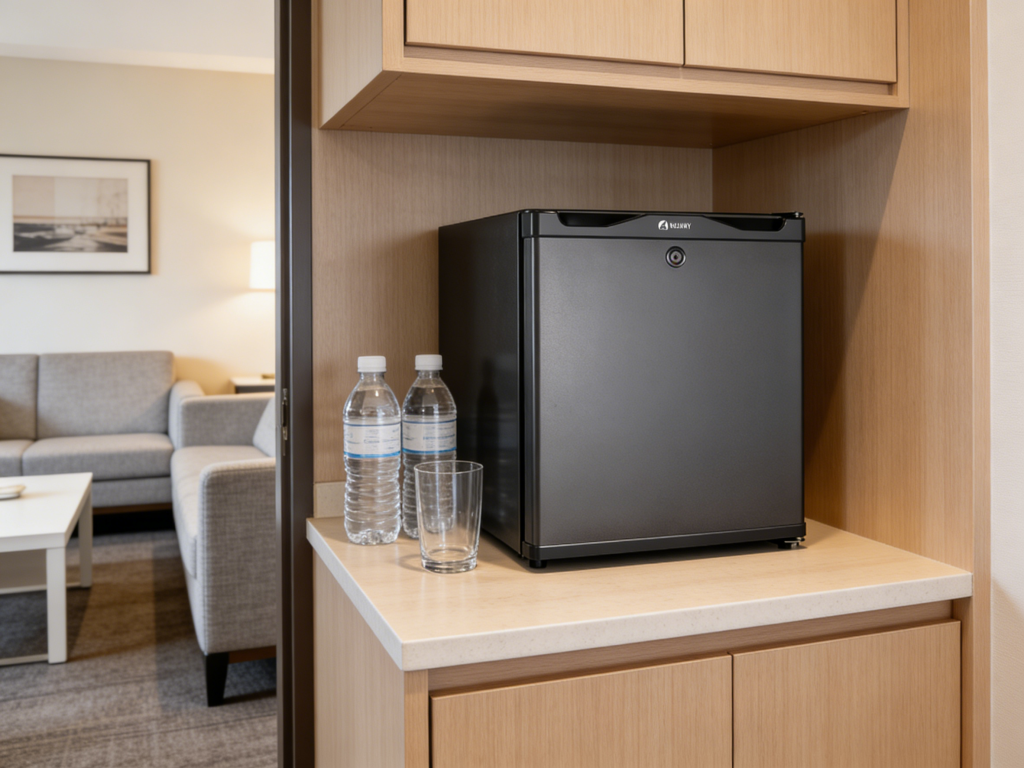
Solid door refrigerators, including plastic and metal door designs, offer a clean and understated appearance that blends perfectly into various room interiors. Plastic door models are lightweight, corrosion-resistant, and easy to clean, making them practical choices for high-turnover hotels. Metal door options provide a more sturdy feel and are often selected for properties that emphasize durability and long-term use.
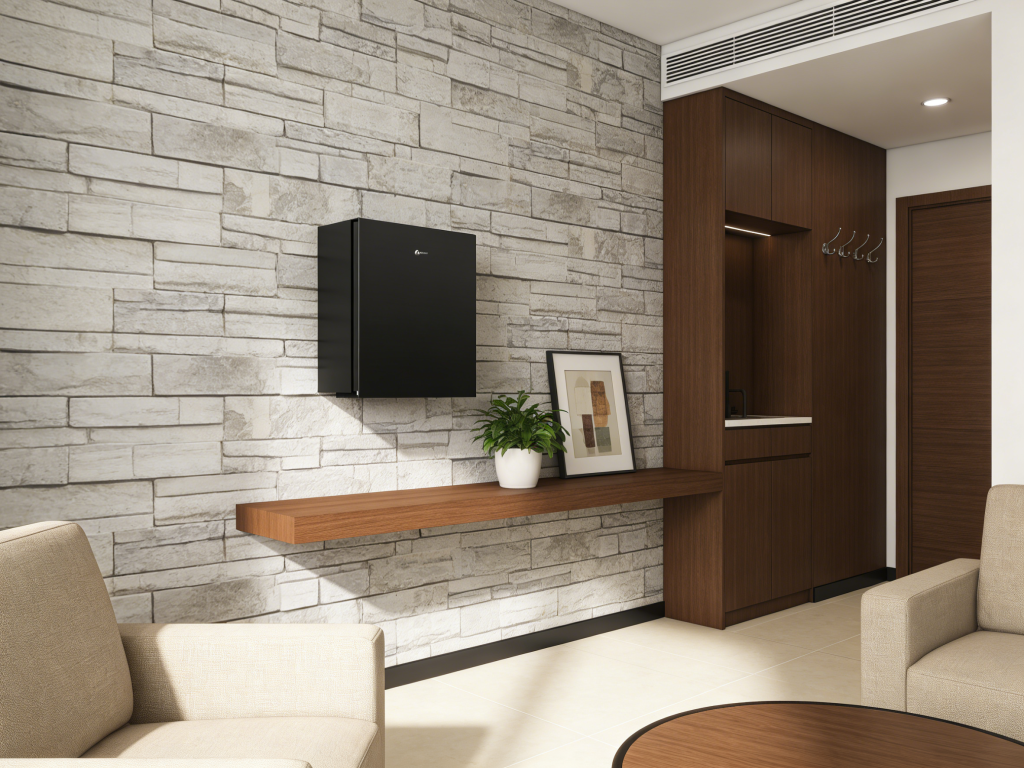
Wall-mounted mini bar refrigerators are designed for rooms with limited floor or cabinet space. By mounting the unit directly on the wall, hotels can free up valuable room area while still offering essential refrigeration functionality. These models are especially suitable for compact urban hotels and modern minimalist room designs.
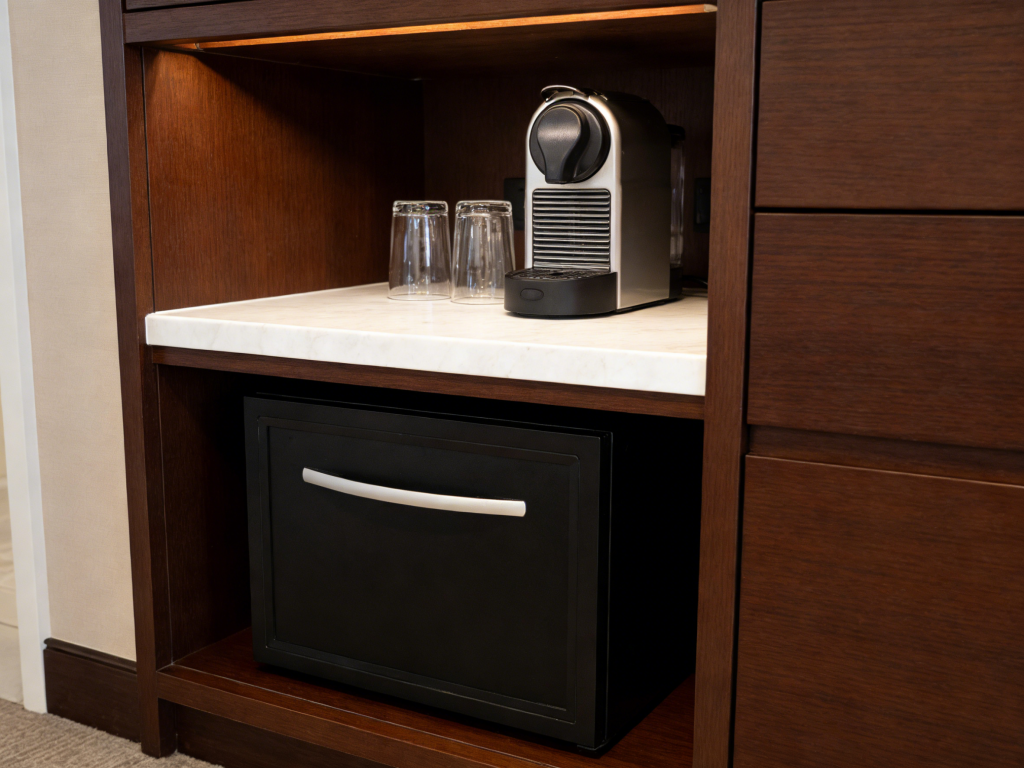
Drawer-style guest room refrigerators are increasingly used in premium hospitality spaces. Installed under countertops or within custom cabinetry, they offer smooth pull-out access and a refined appearance. Drawer refrigerators enhance ergonomics and align well with contemporary interior design trends, making them ideal for luxury hotels and long-stay accommodations.
While mini bar refrigerators meet the needs of most standard guest rooms, larger hotel refrigerators are preferred in suites, serviced apartments, and extended-stay properties. These models provide increased storage capacity for food and beverages, supporting longer guest stays and higher expectations for in-room convenience.
Larger refrigerators maintain consistent cooling performance while offering flexible shelving and improved organization. They are commonly used in hospitality environments where guests treat the room as a temporary living space rather than a short-term stay.
When comparing guest room refrigerators for hospitality spaces, procurement professionals should consider several critical factors:
Selecting the right combination of mini bar and hotel refrigerator models allows properties to standardize quality while adapting to different room categories.
Comparing guest room refrigerators for hospitality spaces is a strategic decision that impacts guest satisfaction, energy efficiency, and operational performance. From compact mini bar refrigerators to glass door, wall-mounted, drawer-style, and larger hotel refrigerator options, each category serves a specific purpose within the hotel environment.
By carefully evaluating room type, guest expectations, and long-term operational needs, hotel procurement teams can select refrigeration solutions that enhance comfort, support revenue opportunities, and align with modern hospitality standards. A well-chosen guest room refrigerator is not only an appliance—it is an integral part of the guest experience.
Recent postsLearn More
Wellway was founded in 1997 and is the first company in China to use diffusion-absorption refrigeration technology to manufacture and sell hotel refrigerators. After years of hard work, we have launched minibar products with various refrigeration methods such as absorption, compressor and semiconductor.
Contact Us