

In modern hotel operations, energy efficiency is not simply an environmental choice — it is a core business strategy. The refrigerator is one of the few electrical appliances in a guest room that runs 24/7, which means its energy consumption directly influences a hotel’s long-term operating cost. For properties with dozens or hundreds of rooms, even small differences in energy usage can lead to substantial savings. Choosing a hotel room fridge with a strong energy rating ensures reduced electricity bills, consistent performance, and an improved guest experience.
Hotel refrigerators today are built with multiple cooling technologies, each offering unique advantages. High-efficiency compressor refrigeration continues to be a reliable option, especially in larger-capacity fridges where higher cooling power is required. Modern compressors are designed to operate with lower energy loads while maintaining fast and stable cooling.
Absorption refrigeration and heat-pipe cooling are also widely used in hotel minibars due to their exceptionally quiet operation and efficient temperature control. These systems operate with minimal noise, making them ideal for guestrooms where sleep comfort is a priority. In addition, many hotel refrigerators are designed with advanced insulation materials, tempered or Low-E glass doors, and drawer-style structures that help minimize thermal leakage and maintain stable internal temperatures with reduced energy use.
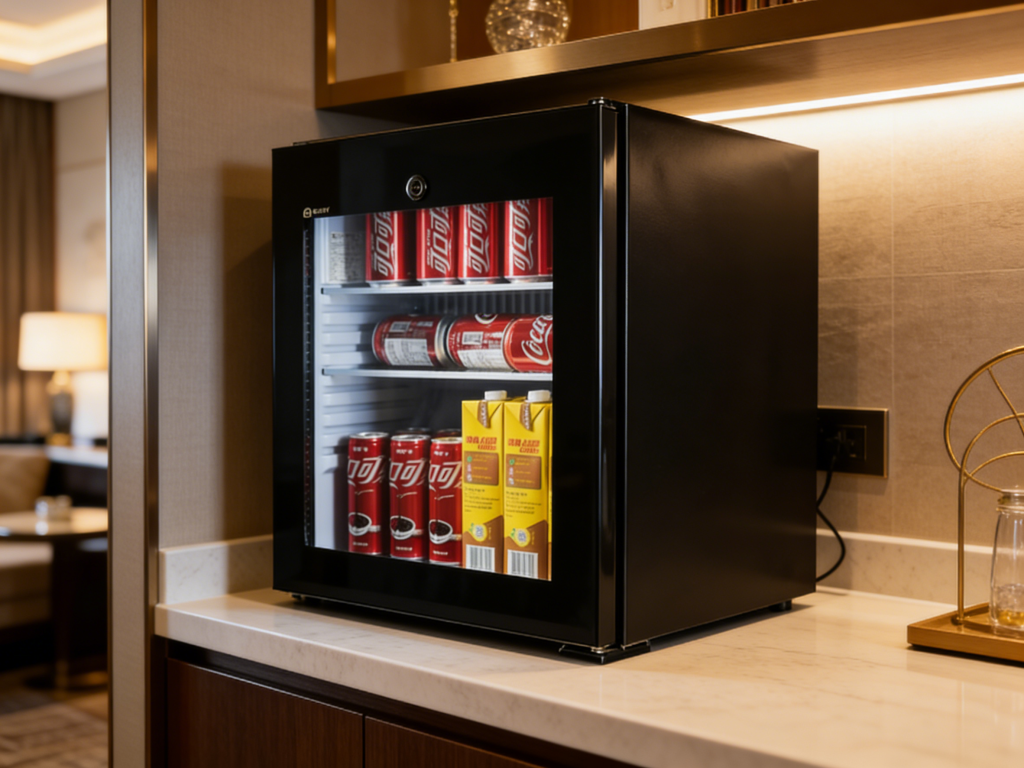
When evaluating B2B hotel refrigerator suppliers, procurement managers should prioritize specific energy-related features that directly influence operating efficiency and guest satisfaction:
Energy-efficient minibars typically consume around 55–65 watts during operation. This low energy requirement ensures that even large hotels can keep electricity costs manageable without compromising cooling performance.
Well-designed hotel fridges feature multi-level temperature adjustments, allowing temperatures to stay within ideal ranges — usually between 4°C and 13°C depending on the setting. Stable temperature control minimizes energy waste while ensuring beverages remain properly chilled.
Silent or near-silent cooling is essential in a guest environment. Absorption and heat-pipe systems are preferred for their whisper-quiet performance, preventing nighttime disturbances and improving overall guest satisfaction.
Good insulation reduces the fridge to cycle frequently. Options like tempered glass, Low-E glass, metal doors, or thick plastic doors help stabilize temperature, reduce condensation, and limit cooling loss with every door opening.
Hotel-grade refrigerators should be manufactured using sturdy materials such as iron doors or impact-resistant panels. A durable build extends the service life of the appliance and reduces long-term maintenance costs. For hotels, durability is part of energy efficiency — fewer breakdowns mean more stable performance and lower operational interruption.
Hotels have diverse room categories, from compact business rooms to luxury suites. Procuring refrigerators available in multiple capacities — such as 14L, 17L, 30L, 40L, or larger — allows hotels to match energy performance with room size and guest expectations without overspending on unnecessary power consumption.
Energy-efficient hotel fridges provide tangible benefits beyond reducing electricity usage:
To simplify procurement decisions, hoteliers can use the following checklist as a benchmark for energy-efficient refrigerator selection:
Hotel-room refrigerators are long-term operating assets. Selecting units with high energy ratings results in lower electricity bills, stronger performance, and enhanced guest comfort — all while supporting a hotel’s sustainability goals. Features such as low power consumption, silent cooling, strong insulation, and durable construction are essential for modern hospitality environments.
By prioritizing these energy standards, hoteliers can ensure that every room is equipped with a fridge that performs efficiently, reliably, and economically for years to come.
Recent postsLearn More
Wellway was founded in 1997 and is the first company in China to use diffusion-absorption refrigeration technology to manufacture and sell hotel refrigerators. After years of hard work, we have launched minibar products with various refrigeration methods such as absorption, compressor and semiconductor.
Contact Us