

When hotels evaluate room appliances, the refrigerator is one of the few items that operates around the clock. A hotel room fridge affects not only guest comfort, but also the property’s long-term operational costs. While the upfront price is often the first consideration, it rarely reflects the true investment. The Total Cost of Ownership (TCO) gives a much clearer understanding of how a hotel fridge performs over years of continuous use. By examining energy efficiency, durability, sizing, noise levels, and design, procurement teams can choose models that deliver long-lasting value.
Hotel refrigerators are used daily and run 24/7. A cheaper unit may look attractive initially, but it can result in higher electricity consumption, frequent failures, or poor cooling performance. Over time, such issues often cost more than the amount saved during purchase.
A reliable fridge directly supports smooth hotel operations. Housekeeping and engineering teams spend less time troubleshooting and more time serving guests. Consistent performance also ensures that minibar services, guest convenience, and premium room experiences remain uninterrupted.
Understanding the TCO allows hotels to predict future costs more accurately. This is particularly important for properties with hundreds of rooms, where even a small difference in daily energy usage can add up considerably over the years.
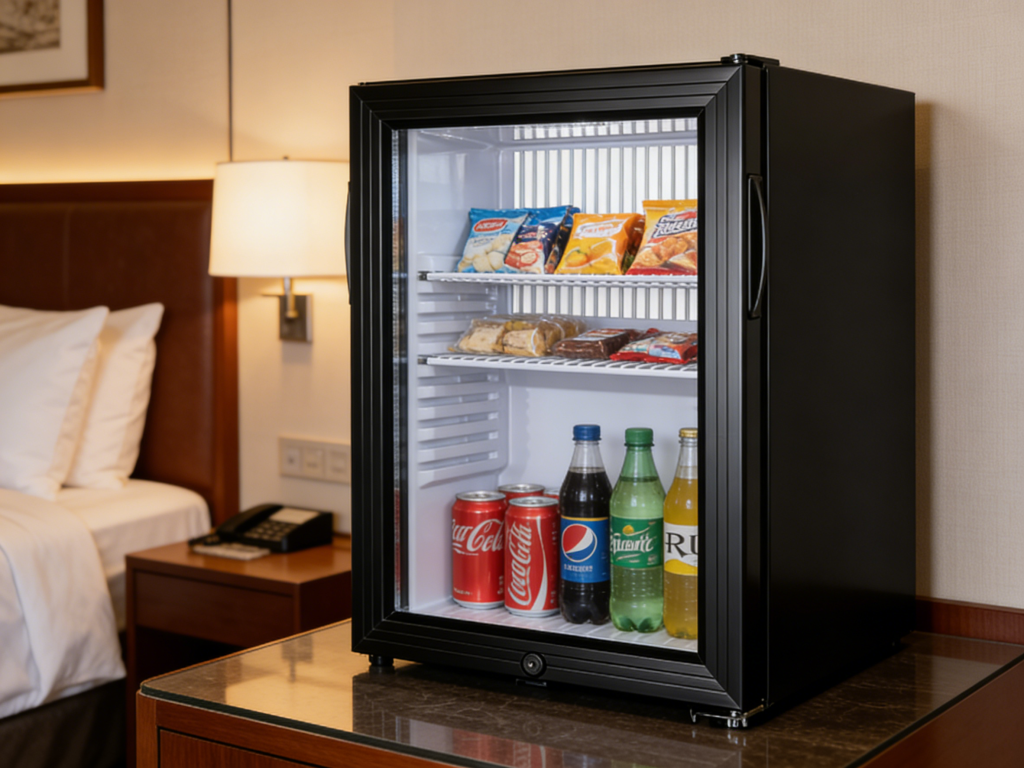
Hotel room fridges never rest. Energy-efficient models reduce the strain on hotel utility budgets. Many hospitality-focused refrigerators feature optimized cooling systems, improved insulation, and stable temperature control to minimize electricity use without compromising cooling performance.
Efficient refrigerators generate less heat, helping maintain a comfortable room temperature. This reduces the load on air conditioning units, indirectly lowering overall energy consumption in the hotel.
Energy-efficient appliances support eco-friendly hotel strategies. Many modern hotel refrigerators are designed to meet environmental standards, using cleaner refrigerants and consuming less power while still delivering dependable cooling.
Even a small noise from a fridge can affect a guest’s sleep quality. Refrigerator hums and vibrations are among the most common in-room noise complaints.
Hospitality refrigerators often incorporate noise-reducing refrigeration systems, making them quieter than typical household units. This ensures guests enjoy a restful environment—leading to better reviews, fewer complaints, and a higher chance of repeat bookings.
Hotel room refrigerators must withstand constant use. Door openings, frequent restocking, and continuous operation demand units built with strong hinges, durable materials, and reliable cooling components.
Choosing a fridge built for hotel environments reduces the likelihood of costly repairs. Long-lasting components, reinforced structures, and stable internal systems improve the lifespan of the refrigerator and minimize downtime.
Hotel fridges often feature simple, cleanable interiors and accessible components that make routine maintenance easy for staff, reducing labor costs over time.
Different room categories require different fridge capacities. Compact minibars suit standard rooms, while premium room types or suites may benefit from larger-capacity models.
Oversized fridges consume unnecessary energy. Proper sizing ensures the appliance cools efficiently without wasting power.
A well-sized refrigerator improves the guest experience. Guests appreciate enough space for beverages, snacks, or personal items—especially in business hotels, resorts, or extended-stay properties.
The appearance of in-room appliances contributes to a hotel’s overall aesthetic. Hospitality fridge suppliers often offer varied finishes, door materials, and styles such as glass doors, iron doors, retro designs, or minimalist black and white models.
Hotels may select options that match the interior décor or even customize colors and finishes. A visually appealing fridge enhances the perceived quality of the room, reinforcing the brand image.
Many hotel-grade refrigerators use environmentally friendly refrigerants and meet current safety standards. These features help hotels stay compliant with developing environmental policies.
Choosing sustainable models ensures long-term use and prevents replacement driven by regulatory changes.
Evaluating the total cost of ownership is essential when selecting a hotel room fridge. By considering energy efficiency, durability, noise levels, design integration, and proper sizing, hotels can reduce long-term expenses while improving guest satisfaction. A well-chosen fridge is not only an appliance — it is an investment in comfort, brand quality, and operational efficiency. Hotels that prioritize TCO finally benefit from lower costs, fewer disruptions, and a better overall guest experience.
Recent postsLearn More
Wellway was founded in 1997 and is the first company in China to use diffusion-absorption refrigeration technology to manufacture and sell hotel refrigerators. After years of hard work, we have launched minibar products with various refrigeration methods such as absorption, compressor and semiconductor.
Contact Us