

In-room refrigeration has become a standard expectation in modern hospitality. For global hotel groups managing diverse properties across regions, selecting the right in-room fridge solutions is essential to delivering consistent guest comfort while maintaining operational efficiency. From business hotels to resorts and serviced apartments, hotel-specific refrigerators play a critical role in enhancing the guest experience without increasing energy costs or maintenance complexity.
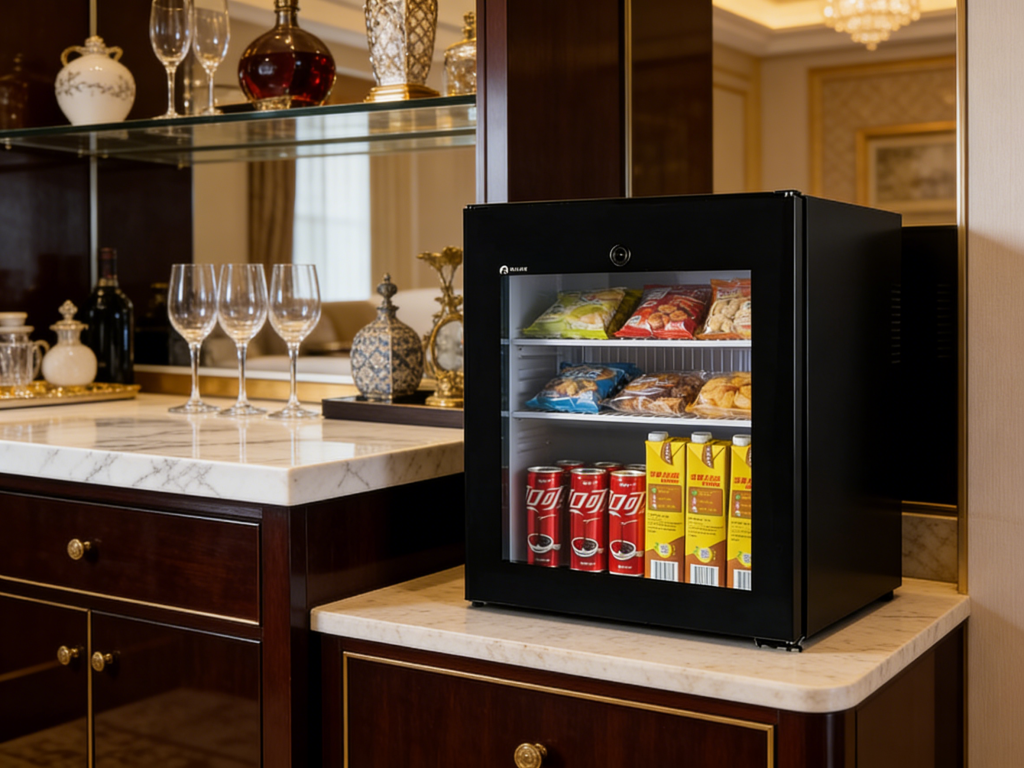
Today’s hotel guests expect convenience and functionality as part of their stay. An in-room refrigerator allows guests to store beverages, snacks, medications, and personal items with ease. This small but impactful amenity contributes to higher satisfaction ratings, longer stays, and stronger brand perception.
For hotel operators and procurement teams, in-room fridges must meet strict standards. They must operate quietly, fit perfectly into limited spaces, and deliver reliable cooling under varying climate conditions. Unlike household refrigerators, hotel-designed models are engineered specifically for guest room use, prioritizing silent operation, compact design, and durability.
Hotel mini bar refrigerators are among the most widely used in-room fridge solutions. Their compact size makes them ideal for standard guest rooms, while their efficient cooling systems ensure stable performance with minimal power consumption.
These refrigerators are available in multiple capacities to suit different room categories. Smaller units are well-suited for economy and standard rooms, while larger capacities meet the needs of premium rooms and suites. Silent or low-noise operation ensures guests are not disturbed, even when the unit runs continuously.
From a procurement perspective, mini bar refrigerators offer flexibility in installation. They can be placed under desks, inside cabinets, or mounted on walls, allowing hotels to optimize room layouts without compromising functionality.
Hotel groups often select refrigerator door styles based on branding strategy and operational goals. Glass door refrigerators allow guests to see available items without opening the door, reducing energy loss and encouraging minibar consumption. These models are commonly used in rooms with stocked beverages or premium minibar programs.
Solid door refrigerators, including plastic or metal door designs, provide a more discreet appearance and are easier to integrate into minimalist or luxury interiors. Metal door options offer enhanced durability and a premium feel, while plastic doors provide lightweight practicality and ease of maintenance.
As hotel interior design trends move toward clean lines and integrated furniture, built-in and drawer-style refrigerators are becoming increasingly popular. These models fit directly into cabinetry, creating a smooth visual effect while offering convenient access for guests.
Drawer refrigerators are particularly suitable for upscale hotels and serviced apartments, where design consistency and user experience are key differentiators. For hotel groups seeking to standardize room designs across properties, these integrated solutions support both aesthetic and functional goals.
Selecting the right refrigerator capacity is a strategic decision for hotel procurement teams. Compact refrigerators are ideal for short-stay guests and limited-space rooms, while larger units provide additional convenience for extended stays, family rooms, or executive suites.
Standardizing capacities across room categories helps simplify purchasing, spare parts management, and maintenance processes. It also ensures consistent guest expectations across multiple locations within a hotel group.
Energy efficiency is a critical consideration for global hotel groups aiming to reduce operating costs and meet sustainability targets. Hotel-specific refrigerators are designed with efficient insulation and optimized cooling systems to minimize power consumption while maintaining reliable performance.
Lower energy usage translates into reduced utility expenses and supports corporate sustainability initiatives. Besides, durable construction and stable operation reduce maintenance frequency, lowering the total cost of ownership over the product lifecycle.
In-room fridge solutions are more than guest amenities—they are strategic assets that influence guest satisfaction, operational efficiency, and brand consistency. By selecting refrigerators designed specifically for hotel environments, global hotel groups can meet diverse guest needs while maintaining control over energy use, maintenance, and procurement costs.
From compact mini bar units to stylish built-in designs, the right in-room refrigerator solution supports a comfortable, modern guest experience across properties worldwide. For hotel procurement professionals, investing in reliable, purpose-built refrigeration is a practical step toward long-term operational success.
Recent postsLearn More
Wellway was founded in 1997 and is the first company in China to use diffusion-absorption refrigeration technology to manufacture and sell hotel refrigerators. After years of hard work, we have launched minibar products with various refrigeration methods such as absorption, compressor and semiconductor.
Contact Us