

In modern hospitality, guest comfort is no longer defined only by design and service—it also depends on the details guests don’t immediately see, but clearly hear, such as the noise level of hotel mini fridges. As refrigerators operate continuously, even subtle sounds can affect sleep quality, guest satisfaction, and online reviews. For hotel owners, operators, and procurement managers, understanding refrigerator noise levels is essential when selecting in-room refrigeration solutions.
This article explores why noise matters, how hotel refrigerators are designed for quiet operation, and what B2B buyers should consider when choosing the right products for their properties.
Hotel rooms are the spaces where guests expect peace and privacy. Unlike kitchens or utility areas, guest rooms amplify appliance noise, especially at night. A fridge that produces humming, vibration, or cycling sounds can easily disturb sleep, leading to guest complaints or poor ratings.
From a commercial perspective, noise complaints often result in room changes, refunds, or maintenance calls—creating unnecessary operational costs. Quiet refrigeration, therefore, is not a luxury feature but a functional requirement for hotels across all segments, from business hotels to resorts and serviced apartments.
Hotel refrigerators differ distinctly from residential models. They are specifically engineered to meet hospitality requirements such as low noise, stable cooling, and continuous operation.
Many modern hotel mini fridges use advanced cooling technologies, including optimized compressor systems or non-compressor solutions, to minimize vibration and mechanical sound. Improved internal airflow design and sound-absorbing insulation further reduce operational noise.
Well-designed hotel refrigerators typically operate at near-silent levels, making them suitable for installation close to beds or seating areas. This level of acoustic performance is essential for hotels that prioritize guest comfort and a premium room experience.
Noise performance is closely linked to energy efficiency. Refrigerators that run smoothly and quietly tend to consume less energy because they experience fewer start-stop cycles and reduced mechanical stress.
For hotels managing dozens or hundreds of rooms, energy efficiency directly impacts operating expenses. Quiet hotel refrigerators are often designed with low power consumption, stable temperature control, and environmentally friendly refrigerants. These features help hotels reduce electricity costs while supporting sustainability goals—an increasingly important factor for global hospitality brands.
Choosing the right refrigerator type is just as important as evaluating noise specifications. Different hotel applications require different designs, each with unique acoustic considerations.
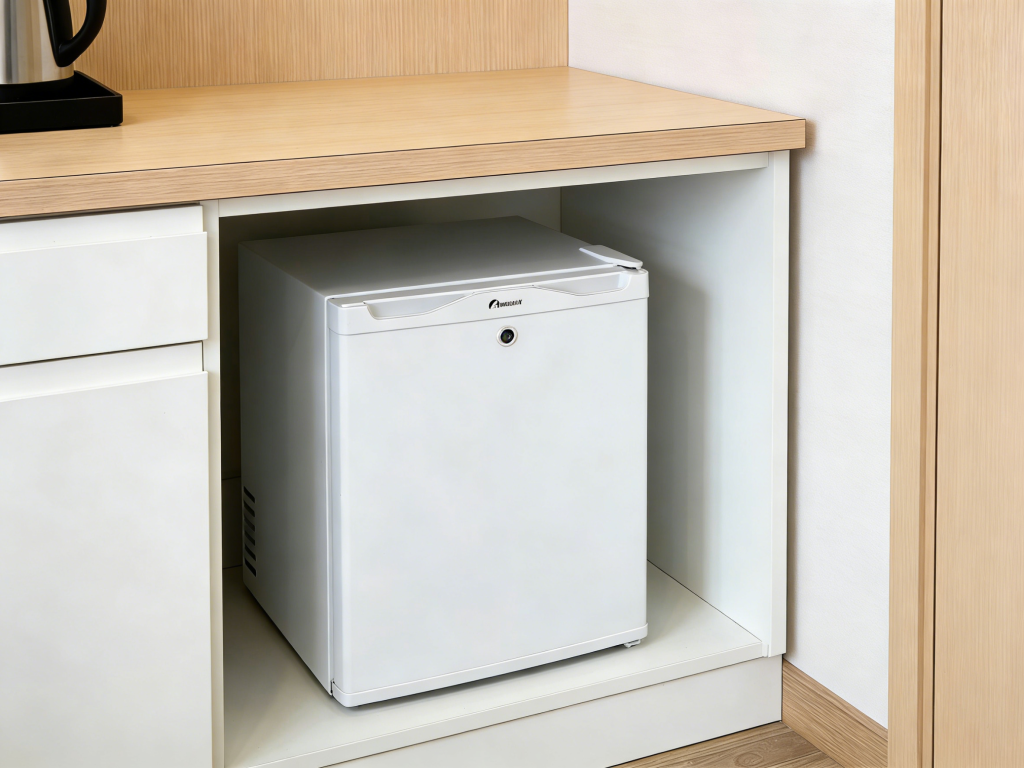
Mini bar refrigerators are the most common in-room refrigeration solution. Typically compact and placed within cabinetry or under desks, these units must operate quietly in close proximity to guests.
High-quality mini bar refrigerators are designed to maintain consistent cooling with minimal sound output. Their silent or low-noise operation ensures that guests can sleep undisturbed while still enjoying convenient access to beverages and snacks.
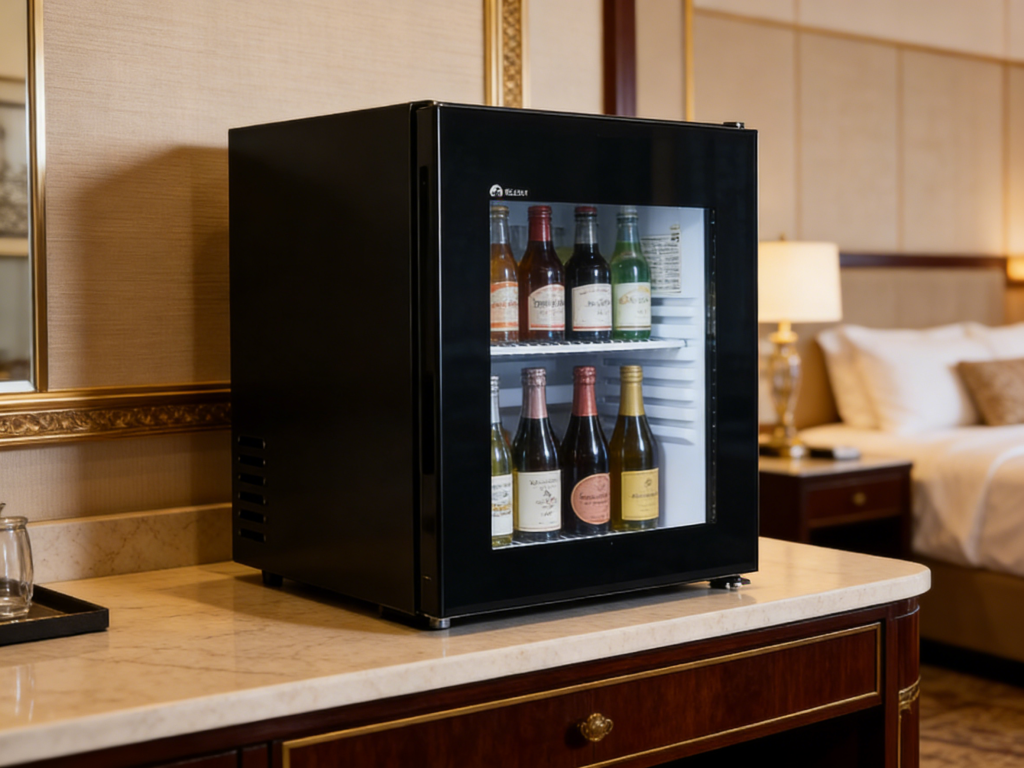
Glass door refrigerators are often used in hotel rooms, suites, executive lounges, or self-service areas. Their transparent doors allow guests to view contents without opening the fridge, improving energy efficiency.
From a noise perspective, these refrigerators must balance visibility, cooling power, and quiet operation. Advanced insulation and optimized cooling systems help ensure that glass door models remain suitable for guest-facing environments without generating disruptive sound.
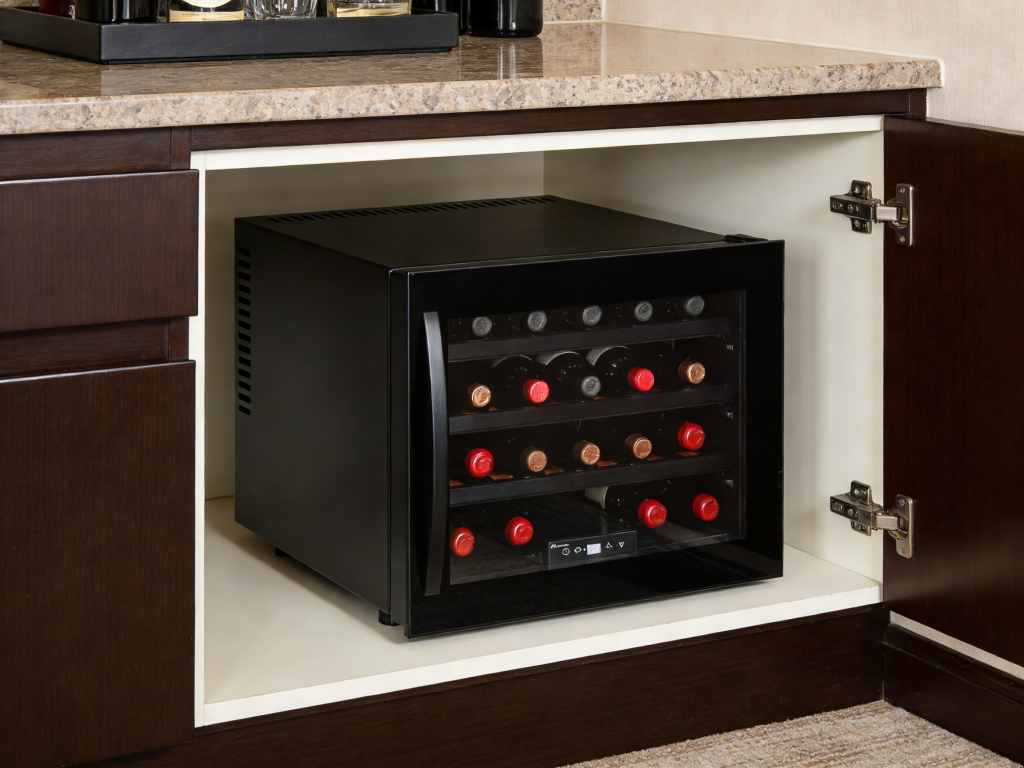
Drawer refrigerators and built-in models are popular in premium rooms and serviced apartments, whose designs integrate perfectly into furniture, reducing sound transmission and visual clutter.
Because they are enclosed within cabinetry, quiet operation is especially important. Smooth drawer mechanisms and stable cooling systems help maintain a refined, silent guest experience while offering convenient access.
When sourcing hotel refrigerators, B2B buyers should evaluate more than price and capacity. Key considerations include:
Selecting refrigerators that meet these criteria helps hotels avoid operational issues while improving guest satisfaction.
In a competitive hospitality market, small details can make a remarkable difference. The noise level of hotel mini fridges directly affects guest comfort, brand perception, and operational efficiency. Investing in quiet, energy-efficient refrigeration solutions is a smart decision for hotels aiming to deliver a high-quality guest experience while controlling costs.
By choosing purpose-built hotel refrigerators designed for silent operation, hotels can enhance room comfort, reduce complaints, and support long-term sustainability goals. For procurement teams, understanding noise performance is not only a technical requirement—it is a strategic investment in guest satisfaction and brand value.
Recent postsLearn More
Wellway was founded in 1997 and is the first company in China to use diffusion-absorption refrigeration technology to manufacture and sell hotel refrigerators. After years of hard work, we have launched minibar products with various refrigeration methods such as absorption, compressor and semiconductor.
Contact Us