

In large-scale hospitality projects, such as hotels, serviced apartments, resorts, and long-stay accommodations, selecting the right mini bar fridge is far more than a simple equipment purchase. Mini bar refrigerators directly impact guest comfort, operational efficiency, energy consumption, and long-term maintenance costs. For hotel procurement teams and project managers, choosing reliable, hotel-grade refrigeration solutions is a critical step in ensuring both guest satisfaction and sustainable operations.
This article outlines key considerations when selecting mini bar fridges for large-scale projects, focusing on performance, durability, design flexibility, and supplier reliability from a B2B procurement perspective.
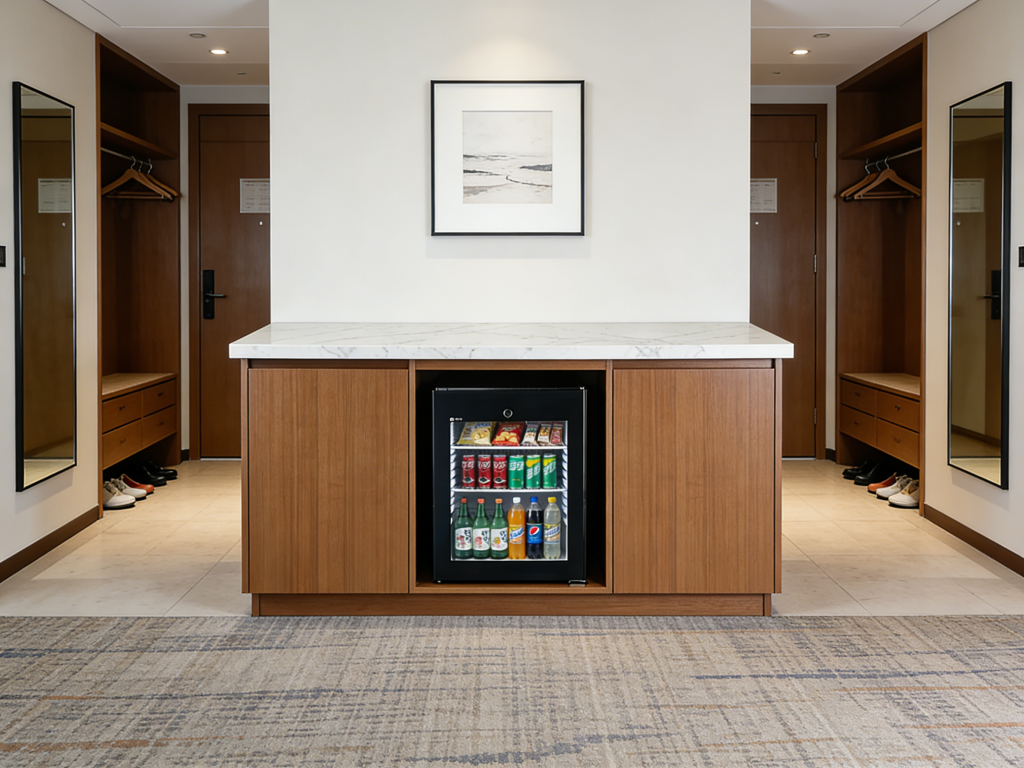
The primary role of a hotel mini bar fridge is to provide stable and consistent cooling for beverages and snacks in guest rooms. However, unlike residential refrigerators, hotel mini bars must meet stricter requirements for noise control, energy efficiency, and continuous operation.
Reliable hotel mini bar fridges are designed to operate quietly, ensuring they do not disturb guests during rest hours. At the same time, they must maintain consistent internal temperatures despite frequent door openings. For large projects, standardizing these functional requirements across all rooms helps maintain a uniform guest experience and simplifies maintenance.
When a project involves hundreds or thousands of rooms, even small differences in power consumption can greatly impact long-term operating costs. Energy-efficient mini bar fridges help hotels reduce electricity expenses while supporting sustainability initiatives and green building standards.
Modern hotel refrigerators are designed to optimize cooling performance while minimizing power usage. Advanced insulation, efficient cooling systems, and well-sealed doors all contribute to reduced energy loss. For procurement teams, evaluating energy efficiency is essential not only for cost control but also for meeting environmental expectations in international hospitality markets.
Noise control is one of the most important features of a high-quality hotel mini bar fridge. Guests expect a peaceful environment, especially in premium rooms and luxury accommodations. Excessive noise from refrigeration equipment can negatively affect reviews and brand reputation.
Hotel-grade mini bar fridges are engineered with low-noise cooling technologies that allow near-silent operation. This is particularly important in compact guest rooms where the refrigerator is located close to sleeping areas. Quiet performance should always be a non-negotiable requirement when selecting products for large-scale hotel installations.
Different room layouts and design concepts require flexible refrigeration solutions. A reliable supplier should offer multiple design and installation options to accommodate diverse project needs.
Wall-mounted mini bar fridges are ideal for rooms with limited floor space, helping maintain clean lines and efficient layouts. Glass door refrigerators provide high visibility for minibar items and are commonly used in premium rooms or suites, allowing guests to easily view contents without opening the door. This also supports energy efficiency by reducing unnecessary door openings.
For boutique hotels or design-driven projects, retro-style mini bar fridges can add character while still delivering professional performance. Meanwhile, plastic door refrigerators offer lightweight construction and resistance to corrosion, making them practical for high-humidity environments. Iron door refrigerators provide enhanced durability and a premium feel, suitable for properties that prioritize robustness and long service life.
In large-scale hospitality environments, mini bar fridges are subject to frequent use and must withstand years of operation. Durable materials, solid door construction, and reliable internal components reduce the risk of breakdowns and costly replacements.
Selecting products built specifically for hotel use ensures better resistance to wear, temperature fluctuations, and daily guest interaction. From a procurement standpoint, durability directly translates into lower total cost of ownership over the lifespan of the project.
For multi-room or multi-property projects, standardization is a key advantage. Using the same models across rooms simplifies installation, staff training, spare parts management, and maintenance procedures.
Hotel mini bar fridges designed for professional use typically feature easy-access components and straightforward maintenance requirements. This allows hotel engineering teams to handle routine servicing efficiently and minimize downtime.
Many hotel groups and developers require customization options to align with brand identity and interior design standards. These may include logo placement, color customization, or specific capacity configurations.
A supplier capable of offering OEM or ODM services can help hotels achieve visual consistency while maintaining functional reliability. This flexibility is especially valuable for international chains and large developers managing multiple properties under the same brand.
Beyond product specifications, the reliability of the supplier plays a key role in project success. A professional hotel refrigeration supplier should demonstrate experience in large-scale projects, stable production capacity, and strict quality control standards.
Strong after-sales support, warranty coverage, and long-term cooperation capabilities are equally important. For large projects, working with an experienced B2B manufacturer ensures smoother communication, predictable delivery schedules, and dependable product performance.
Selecting reliable mini bar fridges for large-scale hospitality projects requires a strategic approach. By focusing on energy efficiency, quiet operation, durable construction, flexible design options, and supplier credibility, hotel procurement teams can make wise decisions that benefit both guests and operations.
A well-chosen mini bar fridge is not only an in-room appliance—it is a long-term investment in guest satisfaction, operational efficiency, and brand quality. Careful selection today helps ensure consistent performance and reduced costs throughout the lifecycle of your hospitality project.
Recent postsLearn More
Wellway was founded in 1997 and is the first company in China to use diffusion-absorption refrigeration technology to manufacture and sell hotel refrigerators. After years of hard work, we have launched minibar products with various refrigeration methods such as absorption, compressor and semiconductor.
Contact Us