

In the hospitality industry, every detail contributes to the guest experience. From the lighting and bedding to the in-room equipment, hotels must choose solutions that enhance comfort while supporting operational efficiency. Among these details, one appliance often overlooked—but essential—is the hotel room fridge. As hotels increasingly prioritize quiet, comfortable environments, silent cooling technology has become a key feature in modern guest room refrigeration. This article explores the importance of silent cooling systems and how hotel-grade fridges are designed to meet today’s expectations for comfort, efficiency, and reliability.
Noise control is an important part of guest satisfaction. Even a small disruption—such as the hum or vibration from a traditional compressor fridge—can negatively affect a guest’s sleep and overall impression of the room. Silent cooling technology directly addresses this concern by allowing refrigeration units to operate with minimal noise output.
Silent fridges typically rely on absorption systems or heat-pipe cooling. These technologies eliminate or greatly reduce the moving components responsible for mechanical noise. For guests, the result is a peaceful and uninterrupted stay. For hotels, fewer complaints and higher comfort ratings contribute to better reviews and a stronger brand reputation.
In an industry where guest experience is everything, removing noise-related disturbances is an easy but powerful upgrade. A quiet fridge becomes part of a comfortable in-room environment that supports quality rest and relaxation.
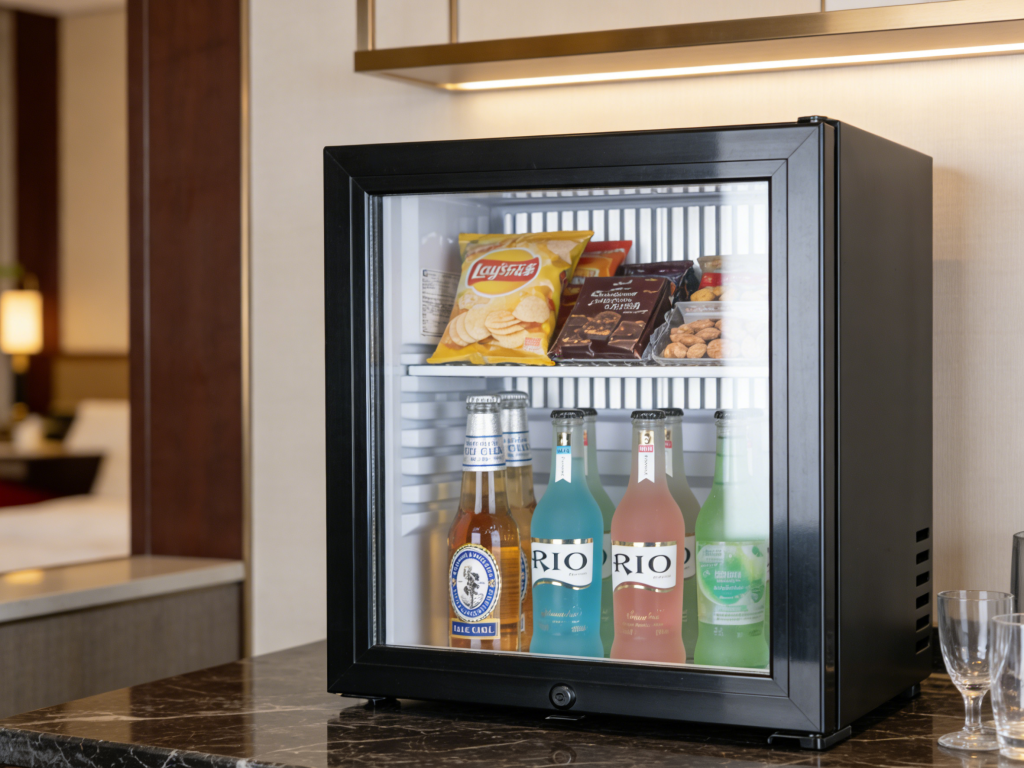
Hotel refrigerators designed with silent operation in mind use non-compressor cooling systems. Two of the most common methods include:
These technologies enable hotel mini bars and in-room refrigerators to maintain consistent temperatures without disturbing guests. They also reduce vibration and eliminate the typical cycling noise associated with compressor-based units.
Silent cooling technology can be integrated into various fridge formats to meet different room layouts and hotel branding needs. Manufacturers today offer a wide range of designs that include:
These options demonstrate that silent cooling is not limited to one type of fridge. Instead, it can be applied to multiple formats, giving hotels flexibility in both functionality and interior design.
Silent cooling systems provide several advantages that go beyond noise reduction. These include:
Guests enjoy a more relaxing environment with no background appliance noise. This supports better sleep quality and overall satisfaction, especially important in business hotels and luxury properties.
Silent cooling technologies often pair with low-wattage, energy-saving components. This helps hotels reduce electricity consumption and operating costs across hundreds or thousands of rooms.
Fridges with fewer moving parts experience less mechanical wear. This results in longer product lifespan, reduced service frequency, and a lower total cost of ownership for hotel operators.
Silent fridges can be placed in cabinets, under counters, or mounted on walls without causing acoustic issues. This allows interior designers greater freedom in room layout and aesthetic planning.
Despite operating quietly, these fridges maintain stable temperature control suitable for beverages, snacks, and minibar offerings. Consistency is essential for maintaining hotel service standards.
A quiet in-room fridge may seem like a small detail, but it contributes to a polished, modern, and guest-first hotel experience. Silent appliances reinforce the hotel’s commitment to comfort while aligning with contemporary expectations for energy efficiency and sustainable operations.
Hotels that invest in silent cooling technology benefit in several ways: fewer guest complaints, improved room ambiance, and a more premium feel in every category of accommodation—from economy rooms to luxury suites.
In many ways, silent cooling has become a natural part of improving the guest experience, supporting both practicality and brand image.
When selecting hotel room fridges equipped with silent cooling, hotels should consider:
By choosing the correct model, hotels can create a cohesive guest room environment that balances performance, design, and comfort.
Silent cooling technology has changed the role of hotel room fridges. No longer just a utility, the modern silent refrigerator is an integral part of delivering a comfortable and satisfying stay. With advantages such as noise reduction, energy efficiency, long-term durability, and flexible design options, silent fridges help hotels enhance the guest experience while optimizing operational efficiency.
As guest expectations continue to rise, silent cooling will remain a key feature in hotel appliances—ensuring a peaceful room environment and reinforcing a hotel’s commitment to quality.
Recent postsLearn More
Wellway was founded in 1997 and is the first company in China to use diffusion-absorption refrigeration technology to manufacture and sell hotel refrigerators. After years of hard work, we have launched minibar products with various refrigeration methods such as absorption, compressor and semiconductor.
Contact Us