

When hotels purchase in-room appliances, they require more than standard household equipment. A commercial-grade mini fridge is specifically engineered for the hospitality environment—where reliability, energy efficiency, silent operation, and aesthetic adaptability all matter. Unlike consumer refrigerators designed for casual domestic use, hotel mini fridges must perform continuously, withstand frequent use, and enhance the overall guest experience.
Below, we break down the defining features that set commercial-grade hotel mini fridges apart from typical home units.
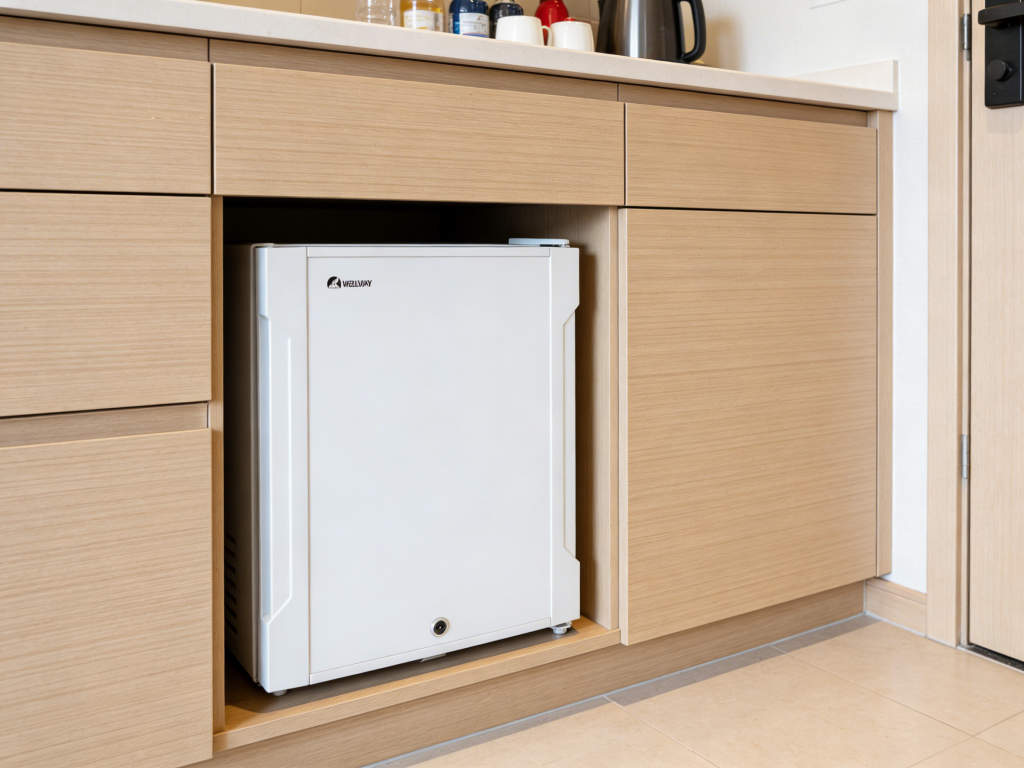
Commercial-grade mini fridges are created with a deep understanding of hotel room layouts and guest expectations. Their compact structure allows them to blend into modern hotel interiors, whether inside a cabinet, under a desk, or mounted on the wall. Many models come in slim or square formats to maximize usable space in smaller guest rooms.
Hotels also require flexibility in visual design. That’s why commercial suppliers offer different door materials—such as glass, plastic, or iron—to match various room styles. From minimalist modern rooms to retro-inspired boutique hotels, these refrigerators can visually integrate into any décor. Some models even support customized appearances, allowing hotels to use specific colors or finishes that align with their brand identity.
Overall, the design focus goes far beyond functionality. A commercial mini fridge must look discreet, stylish, and professional while preserving room aesthetics.
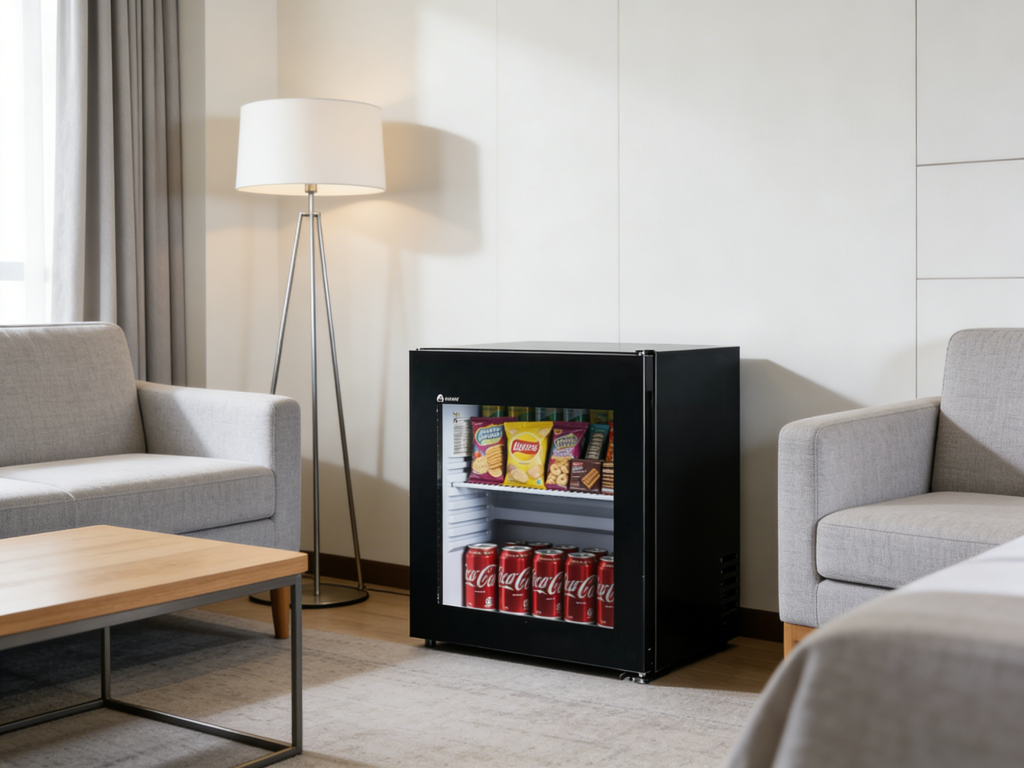
One of the most important differences between commercial-grade and household mini fridges is noise control. Guests expect restful sleep and a quiet environment—something a typical home refrigerator cannot always deliver.
Many commercial hotel fridges use advanced cooling technologies such as absorption or heat-pipe systems. These systems are engineered to operate with extremely low noise, making them ideal for 24-hour use inside sleeping areas. Unlike compressor-driven household fridges that may produce humming or vibration sounds, commercial models keep noise levels close to silent, ensuring guests remain undisturbed throughout the night.
This quiet technology greatly improves the overall guest experience and is one of the top reasons hotels choose dedicated hospitality-grade refrigeration.
Hotels operate dozens—or even hundreds—of mini fridges simultaneously. Energy consumption becomes a major part of operational costs, which makes commercial refrigeration efficiency important.
Commercial-grade mini fridges are designed for long-term, continuous use while maintaining excellent energy performance. Many models include adjustable temperature settings, allowing staff to optimize cooling depending on what is stored. This ensures stable performance across a wide range of climates and guest needs.
Because they run non-stop, these fridges are built with highly efficient systems that reduce electricity usage without compromising cooling capability. This translates into cost savings and a smaller environmental footprint—key advantages for modern hotel operators.
A hotel mini fridge must endure far more frequent opening, closing, cleaning, and restocking compared to a typical home fridge. Commercial suppliers build their refrigerators using sturdy materials and long-lasting components to handle these demands.
Models featuring iron doors, tempered glass, or high-quality plastic are more resistant to scratches, dents, moisture, and corrosion. Interior shelving and liners are likewise constructed for durability and easy cleaning—important for maintaining hygiene standards and extending product lifespan.
Because of their sturdy build, commercial-grade fridges reduce maintenance costs, minimize downtime, and ensure long-term reliability—critical for hotel operations.
Hotels operate various room categories, each with different spatial and functional requirements. Commercial fridge suppliers offer multiple capacities—from compact 14L or 17L units for small rooms, to 30L or 40L minibars for more spacious accommodations.
Door style options further increase versatility:
Many suppliers also offer wall-mounted models, saving floor space and giving hotels greater flexibility in room layout. This level of adaptability is rare in household refrigerators, which are designed for fixed kitchen spaces rather than interior design integration.
Beyond guest experience, commercial mini fridges support efficient hotel operations. Features often include:
These practical considerations make commercial-grade models much more suitable for hotel teams compared to consumer fridges, which lack such operational features.
A commonly selected hotel model is the 30L commercial mini fridge. This size strikes a balance between compactness and storage capacity, making it ideal for standard hotel rooms.
Key characteristics often include:
This type of fridge shows the core strengths of commercial-grade design: quiet, efficient, durable, and visually aligned with hotel interiors.
In summary, commercial-grade mini fridges differ from household refrigerators in nearly every meaningful way:
For hotels, a mini fridge is more than an appliance—it’s part of the guest experience and plays a role in operational efficiency. Investing in commercial-grade refrigeration ensures reliability, comfort, and long-term cost control.
Recent postsLearn More
Wellway was founded in 1997 and is the first company in China to use diffusion-absorption refrigeration technology to manufacture and sell hotel refrigerators. After years of hard work, we have launched minibar products with various refrigeration methods such as absorption, compressor and semiconductor.
Contact Us