

In modern hospitality, guest expectations continue to rise, and comfort-driven amenities play a critical role in shaping overall satisfaction. One such essential yet often underestimated feature is the guest room refrigerator. Whether used for storing beverages, snacks, or personal items, a well-chosen hotel refrigerator contributes directly to convenience, perceived room value, and operational efficiency. For hotel owners, operators, and procurement professionals, understanding what defines a good guest room refrigerator is key to making wise purchasing decisions.
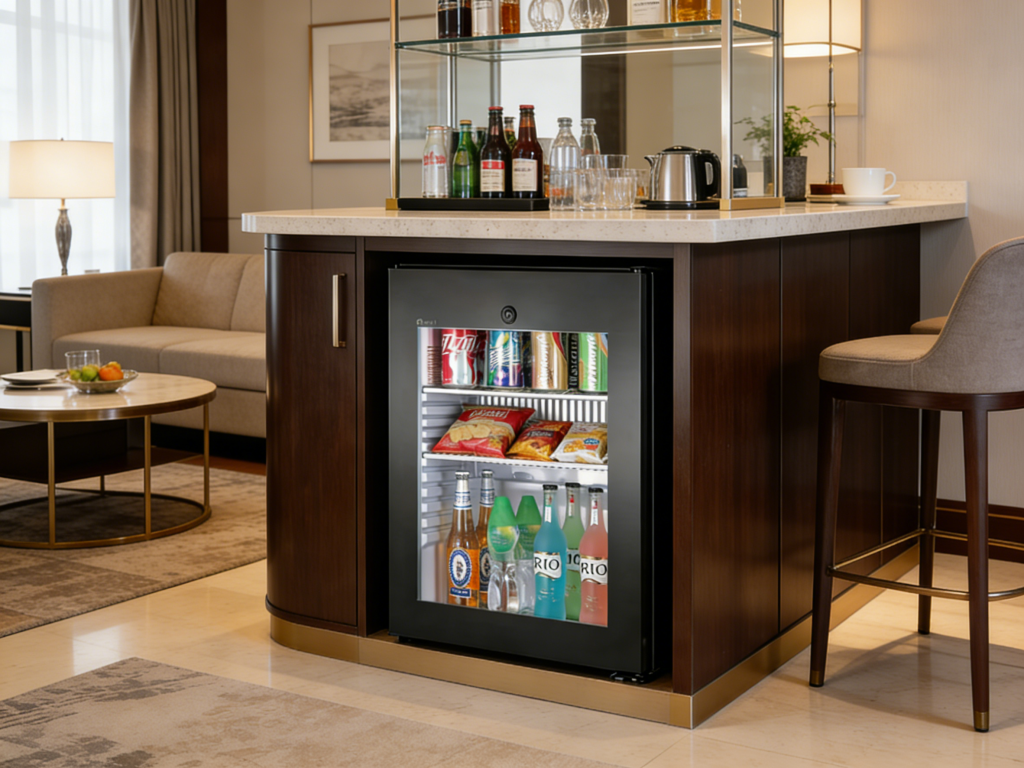
A good guest room refrigerator must deliver stable and reliable cooling under continuous operation. In a hotel environment, refrigerators are in use around the clock, often with frequent door openings. Units designed specifically for hospitality applications maintain consistent internal temperatures to ensure food safety and beverage freshness without excessive energy consumption.
Energy efficiency is equally important for hotels managing large room inventories. Low-energy refrigerators help reduce overall electricity costs and support sustainability initiatives increasingly adopted by global hotel brands. Models developed for hotel use are engineered to balance cooling effectiveness with reduced power draw, making them suitable for long-term, high-volume deployment across properties of all sizes.
Noise control is a major consideration in guest rooms, particularly in business hotels, luxury properties, and extended-stay accommodations. A good hotel refrigerator should operate silently or near-silently, ensuring it does not disturb sleep or concentration.
Hospitality-grade refrigerators are designed with low-noise cooling systems that allow them to run smoothly throughout the day and night. Quiet operation not only improves the guest experience but also reduces complaints and minimizes the possibility of room changes caused by disruptive appliance noise.
Hotels rarely operate with a single room layout. From compact standard rooms to spacious suites, refrigeration needs vary distinctly. A good guest room refrigerator lineup offers multiple sizes and capacities to accommodate diverse room configurations.
Smaller capacity mini bar refrigerators are ideal for limited spaces, while larger models support extended-stay guests or premium room categories. Drawer-style refrigerators and under-counter designs provide discreet storage and perfect integration into built-in furniture, allowing hotels to optimize both space and functionality.
This variety ensures that procurement teams can standardize quality while adapting the capacity to specific room types and service levels.
Beyond functionality, the refrigerator must complement the room’s interior design. In modern hospitality, appliances are no longer hidden; they are part of the visual experience. A good guest room refrigerator should feature clean lines, neutral finishes, and adaptable styles that align with contemporary, classic, or boutique hotel aesthetics.
Options such as solid doors, glass doors, iron finishes, or retro-inspired designs allow hotels to match appliances with brand identity. Visual consistency enhances perceived quality and reinforces a cohesive guest room environment, particularly in lifestyle and design-focused hotels.
Hotel refrigerators must withstand frequent use, daily housekeeping routines, and constant temperature adjustments. Durability is therefore a defining characteristic of a good guest room refrigerator. Hospitality-grade units are built with sturdy materials, reinforced doors, and reliable internal components to ensure long service life.
Durable construction reduces maintenance frequency, limits replacement costs, and minimizes operational disruptions. For hotel operators, investing in reliable refrigeration equipment results in better long-term value and lower total cost of ownership.
Guest room refrigerators should be intuitive for guests and efficient for staff. Simple temperature controls, adjustable shelving, and easy-access storage improve usability for guests with varying needs. At the same time, housekeeping teams benefit from refrigerators that are easy to clean, restock, and inspect.
Features such as removable shelves, clear interior layouts, and accessible components simplify daily operations and reduce labor time. Ease of maintenance ensures consistent performance across multiple rooms and supports smooth hotel operations.
For many hotels, especially chains and boutique brands, customization plays a strategic role. A good guest room refrigerator solution supports branding flexibility, whether through color customization, logo application, or design alignment with room furniture.
Customizable refrigeration units help hotels maintain visual consistency across properties while reinforcing brand recognition. This is particularly valuable for upscale hotels aiming to deliver a distinctive, branded guest experience.
A good guest room refrigerator is more than a basic appliance—it is a functional, aesthetic, and operational asset. The best hotel refrigerators combine consistent cooling, energy efficiency, quiet operation, flexible sizing, durable construction, design compatibility, ease of use, and customization potential. By selecting refrigeration solutions designed specifically for hospitality environments, hotel procurement professionals can enhance guest comfort, reduce operational costs, and support long-term brand value.
Choosing the right guest room refrigerator reflects a hotel’s commitment to quality, efficiency, and guest satisfaction—key factors that define success in today’s competitive hospitality market.
Recent postsLearn More
Wellway was founded in 1997 and is the first company in China to use diffusion-absorption refrigeration technology to manufacture and sell hotel refrigerators. After years of hard work, we have launched minibar products with various refrigeration methods such as absorption, compressor and semiconductor.
Contact Us