

Standardization has become a silent but essential strategy for modern hotel groups. Behind every consistent guest experience is a network of operational decisions that affect comfort, service efficiency, and long-term cost control. One such decision is the unification of hotel room refrigerator models across properties.
While guests often pay little attention to the brand or model of the fridge in their room, hotel managers and procurement teams understand its strategic importance. This article explains why hotel chains choose to standardize their mini-bar and room refrigerator models — from guest satisfaction and maintenance efficiency to energy savings and brand consistency.
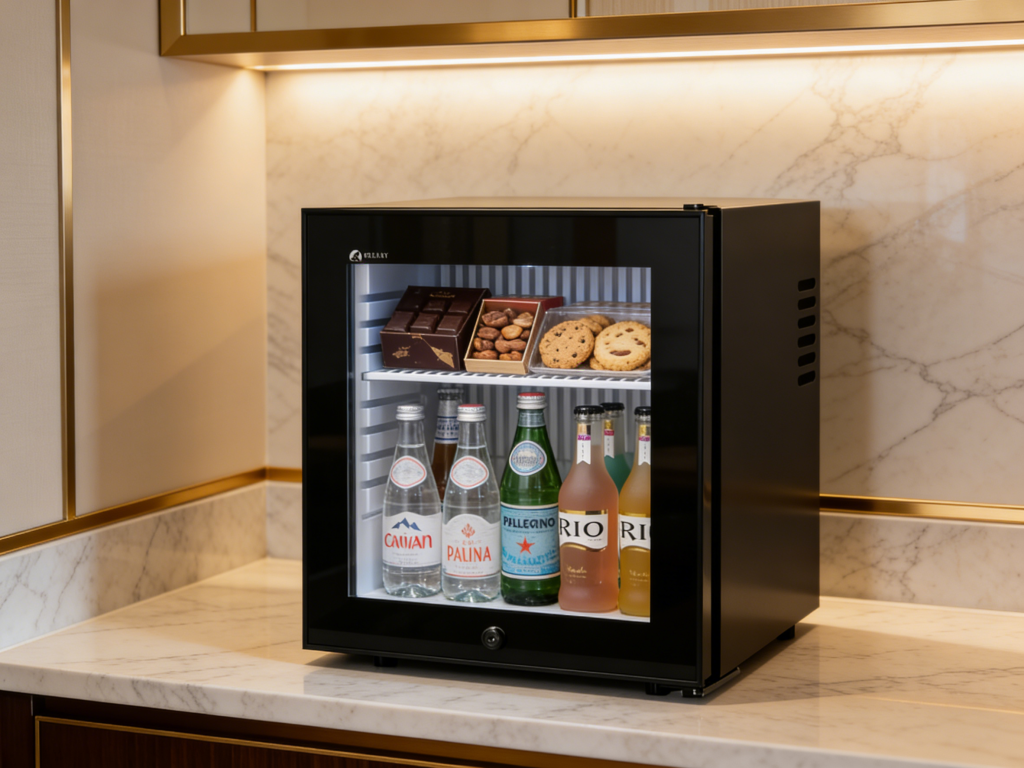
Hotel guests seek comfort, predictability, and a quiet sleeping environment. Standardizing room fridge models helps deliver this experience across different locations and room types.
Hotel-grade refrigerators are engineered for ultra-quiet performance, using technologies such as absorption or heat-pipe cooling systems. By installing the same low-noise models across rooms, hotel chains ensure that all guests — regardless of where they stay — enjoy an undisturbed night’s rest.
Standardization also ensures consistent cooling performance, interior storage layout, temperature stability, and usability. Whether a guest stays in a standard room, a business suite, or another branch of the same hotel chain, the refrigerator works the same way every time.
For hotel operations departments, standardizing equipment is a practical necessity. When all rooms use the same fridge model or a set of unified models, maintenance becomes far more efficient.
Technicians only need to be familiar with one system. Spare parts, shelves, and door components can be stocked in bulk. Troubleshooting becomes simpler because staff members do not need to diagnose dozens of different models.
If a unit needs to be replaced, the process is quick and predictable. This reduces downtime and prevents situations in which a guest finds an “out-of-order” minibar in their room — protecting service quality and the hotel’s reputation.
Hotel chains purchasing standardized refrigerators can take advantage of bulk pricing, reducing initial investment costs greatly. But the savings extend well beyond procurement.
Modern hotel refrigerators are designed with energy-efficient technology that helps reduce long-term electricity consumption. For a large hotel with hundreds of rooms, the difference between a standard residential fridge and a dedicated energy-saving hotel unit can translate into substantial annual savings.
When the brand adopts efficient refrigerators across all properties, the chain can accurately estimate energy usage, manage sustainability goals, and maintain predictable operating costs.
A hotel’s interior design reflects its brand identity. Standardizing refrigerator models allows interior designers to create rooms with a consistent layout, cabinetry, and visual appeal.
Hotel-grade refrigerators are available in a variety of configurations — such as glass-door, iron-door, compact 25-liter units, or larger 40-liter minibar fridges — yet they maintain a unified design language. This flexibility lets hotels choose different sizes for different room categories while still maintaining stylistic harmony across their entire portfolio.
Whether installed under a desk, integrated into a minibar cabinet, or placed inside a wardrobe, standardized fridge dimensions help make the room design and renovation process.
Unlike domestic refrigerators, hotel refrigerators are built for constant use in high-turnover environments. They must withstand frequent opening and closing, varying ambient room temperatures, and continuous operation.
Hotel-grade models are typically equipped with durable components, scratch-resistant doors, and stable cooling systems designed for 24-hour operation. Standardizing ensures that every property uses models tested and proven to handle the demands of hotel service.
This reliability reduces the frequency of replacements and minimizes operational disruptions.
As hotel groups expand — adding new buildings, new cities, or entire new regions — standardization becomes even more valuable. New properties can replicate the same equipment list, installation plan, and maintenance procedures without needing to evaluate new refrigerator models each time.
This not only simplifies procurement but also ensures new properties instantly align with brand standards. It creates a smooth, recognizable guest experience across every location within the chain.
Standardization does not mean using a single refrigerator model for every room. Instead, hotel chains typically standardize within a product family.
For example:
By choosing models from the same product line, hotels maintain consistency while still adopting amenities to different guest segments.
For hotel chains, choosing to standardize hotel room fridge models is a strategic decision that supports many critical goals — guest satisfaction, operational efficiency, cost control, sustainability, and brand consistency.
Hotel-grade refrigerators offer the durability, low-noise performance, efficiency, and design flexibility that modern hospitality brands require. Standardizing across these models allows hotel groups to make operations easy while delivering a reliable, uniform experience that guests can trust.
As the hospitality industry continues to prioritize sustainability, comfort, and efficiency, standardized room appliances — especially refrigerators — will remain an essential foundation of successful hotel management.
Recent postsLearn More
Wellway was founded in 1997 and is the first company in China to use diffusion-absorption refrigeration technology to manufacture and sell hotel refrigerators. After years of hard work, we have launched minibar products with various refrigeration methods such as absorption, compressor and semiconductor.
Contact Us